HCI's Existential Shift: What Research is Worth Doing in the Era of Infinite AI?
Over the last year, generative foundation models have swept through the technology sector with unprecedented speed. When code can be auto-generated and complex UIs rendered in real-time from a simple text prompt, many human-computer interaction (HCI) researchers have felt an existential tremor: What value does traditional HCI research retain in an AI-dominant world?
The core visual metaphor that drives my current thinking is captured here: it is not about AI replacing us, but about building a bridge of intent.
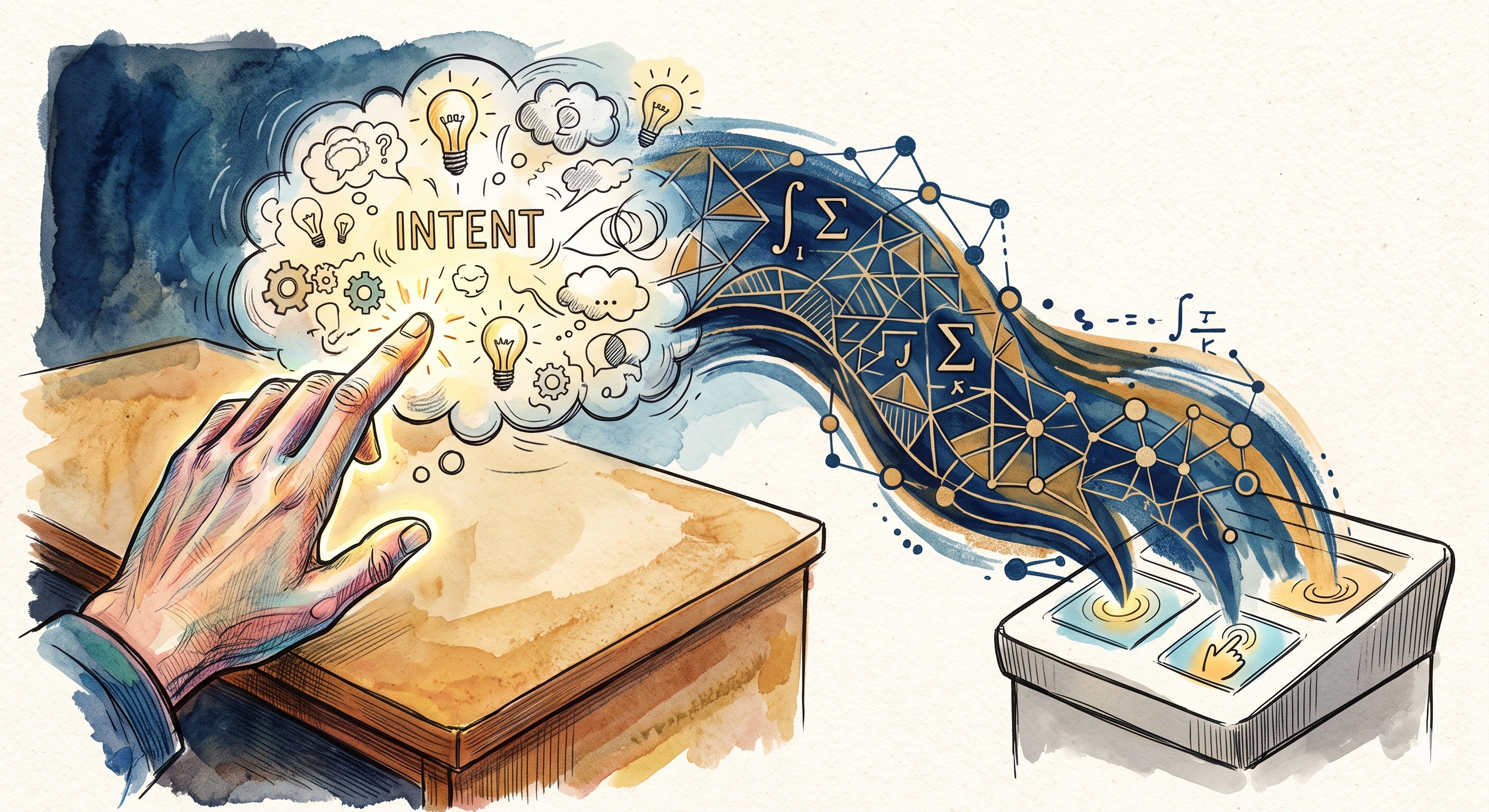
This moment requires more than just making AI “usable.” It demands that we redefine what counts as meaningful interaction. Standing at this paradigm shift, I have been reflecting deeply on the core tenets of HCI. If we are to move beyond trivial interface polish, what research is truly worth doing? What kind of research is profound enough to matter?
I believe future HCI research must not simply wrap powerful AI in a slick skin; it must redefine the relationship between humans and computing across three profound dimensions.
1. From “Command and Execute” to the “Agentic Dance”
Traditional HCI is built on direct manipulation: we click a button, the system executes. This is a linear, transaction-based model. In the era of large models, the essence of interaction is shifting toward the delegation of intent.
The first profound research area is navigating the dynamic boundary of agency in multi-agent ecosystems. When we are no longer facing a single tool but a complex, autonomous swarm of specialized AIs, how do we design interaction mechanisms that preserve human control and authorship?
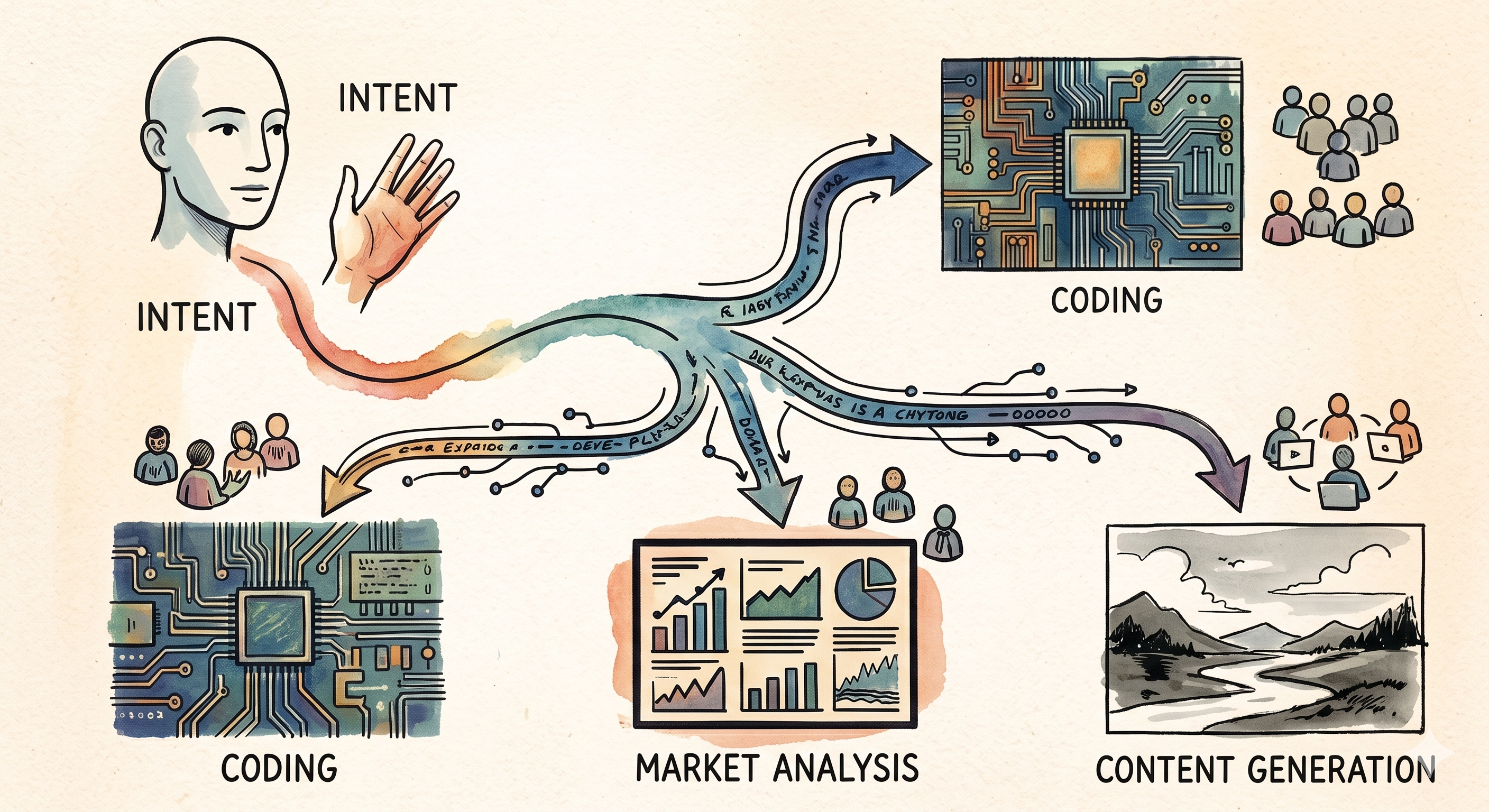
This isn’t just about putting a ‘Human-in-the-loop.’ It is about designing a true Human-AI Collaboration Interface. The most valuable research will explore how AI agents can possess cognitive resonance with humans—understanding our subtle context and implicit goals, rather than demanding perfectly phrased prompts. This is not just a smarter execution; it is a collaborative partnership.
2. Escaping the Chatbox: Embodied, Spatialized AI
Currently, 99% of generative AI interaction is trapped inside a text-based dialogue window (the chatbox). This is an incredibly narrow bandwidth. Human cognition is embodied; we rely on space, vision, and physical intuition to process complexity.
A second profound research direction is Escaping the Chatbox and anchoring AI capability within immersive, spatial computing environments. We need to create a whole new generation of spatial visualization metaphors that replace simple dialogue. How do we take the abstract reasoning of an AI black box and make it visually intuitive, physically manipulable, and spatially contextual?
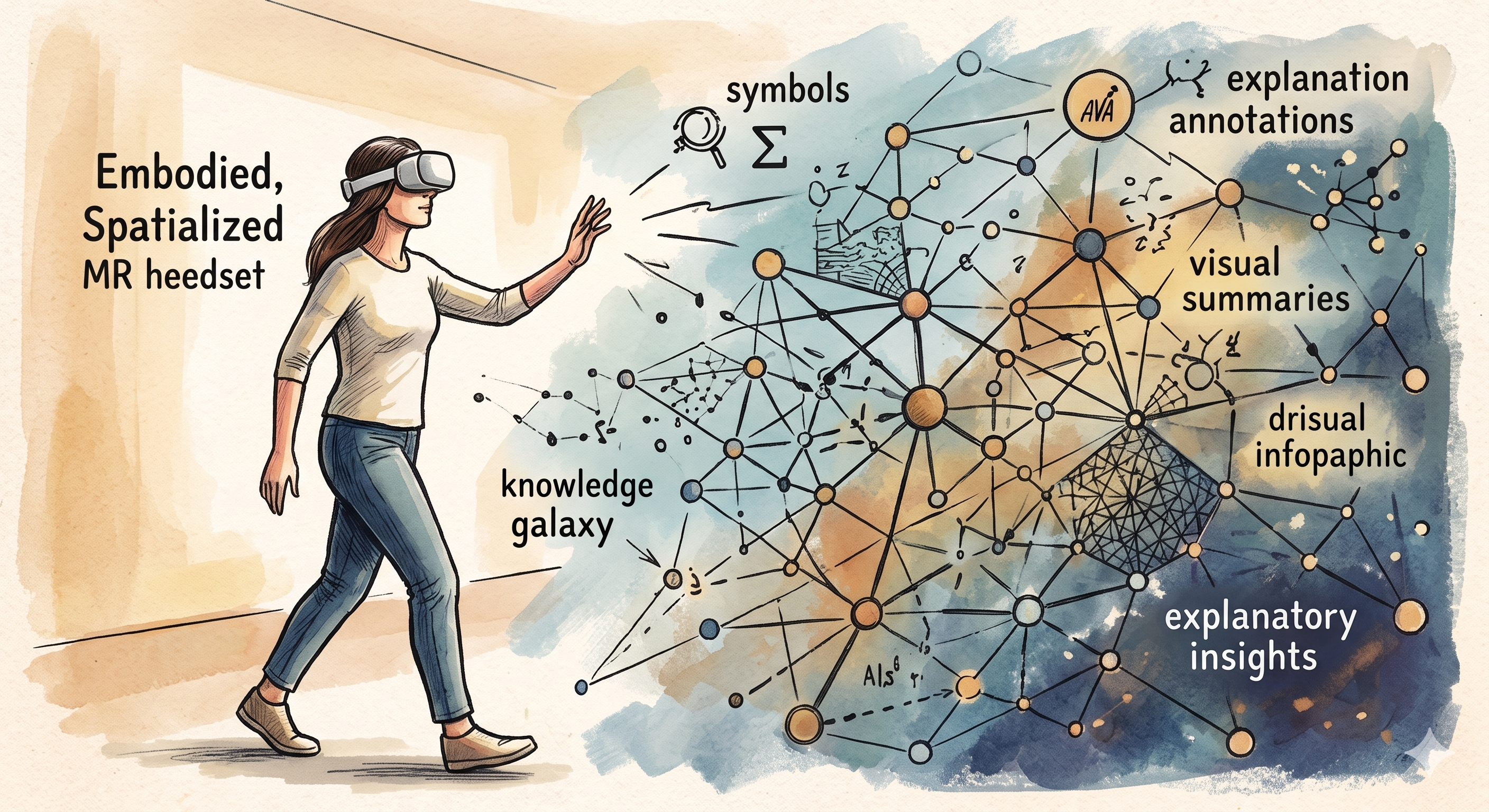
The fusion of foundation models and Mixed Reality (MR/VR) offers a path forward. Research that explores physical walking through complex knowledge structures, where AI insights are seamlessly layered over data objects in real-time based on your physical perspective, is exceptionally valuable. This isn’t just better visualization; it is cognitive augmentation.
3. Directed Creativity and the Narrative Loop
When AI can generate near-perfect photorealistic images or flawless code instantly, what happens to human creativity? Some fear devaluation. I argue that the future of HCI lies in elevating users from “prompt engineers” to “directors of emergent narratives.”
Technology is fundamentally a medium for expression. The most profound HCI research will invent tools that amplify human expressiveness. Generative AI should not generate the entire final product autonomously; it must provide the brush strokes, but the user defines the composition and meaning.
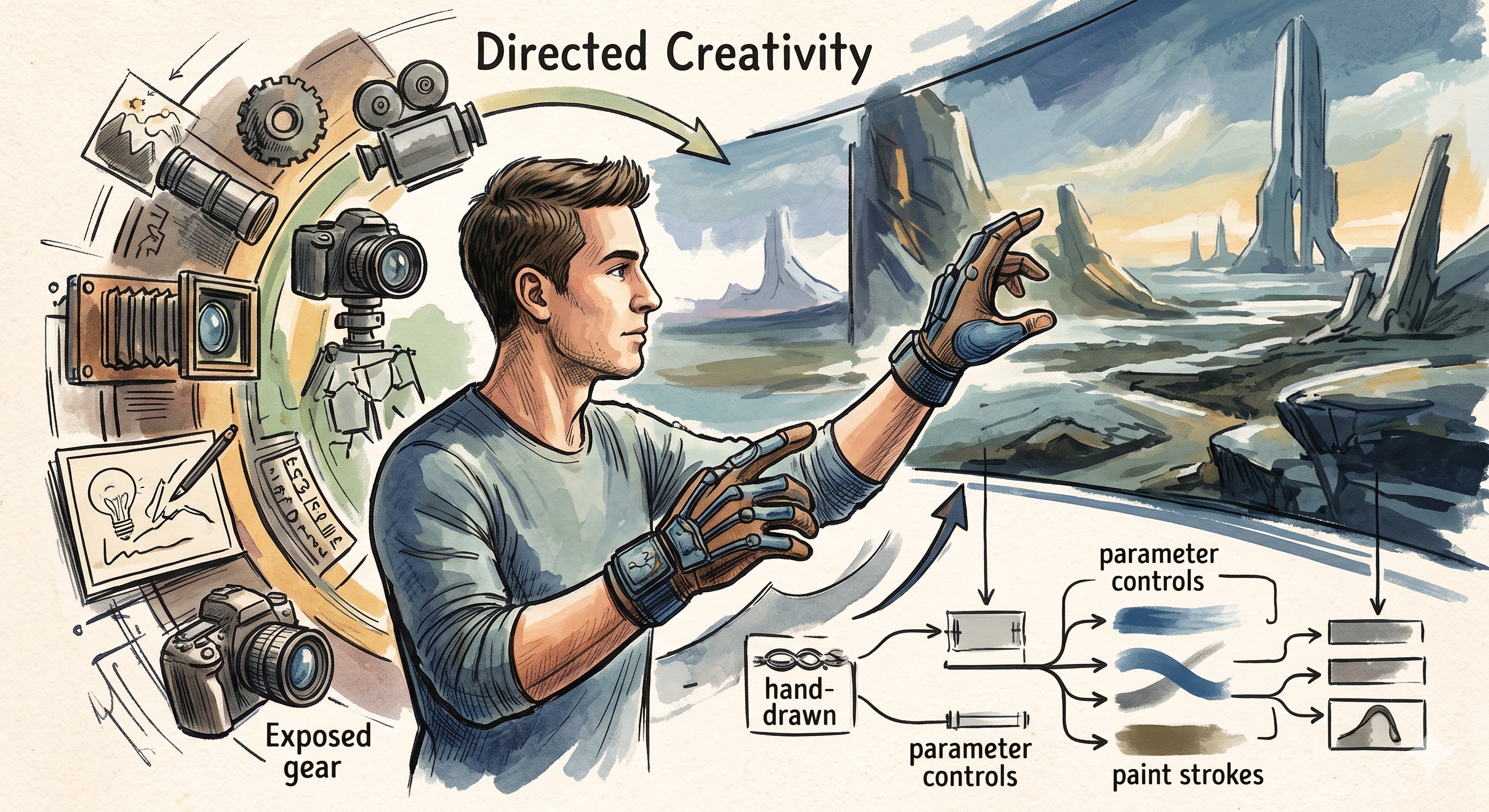
Value is created by designing what I call the Directed Creativity Loop. We need interaction models where the user’s nuanced control—expressed through gesture, intention, or emotion—is the primary driver of creation. The AI is a powerful generator that instantaneously synthesizes possibilities, but the human retains the role of narrative selection and synthesis.
Re-anchoring the Human
HCI research is not facing obsolescence; it is facing its true, final challenge. The technology has evolved faster than the interaction framework. The value of HCI is no longer in optimizing interaction speed; it is in anchoring the rapid, alien intelligence of foundation models to human values.
The goal of computing has never been to prove how smart machines are. It has been to discover what we can become. In the AI era, profound research is that which ensures that as intelligence expands exponentially, the human remains free, creative, and centered in the digital world. That is the only research worth doing.
Enjoy Reading This Article?
Here are some more articles you might like to read next: